


Las Vegas
Las Vegas, NM 87701-9714
Plan Your Visit
Sitting between the foothills of the Sangre de Cristo Mountains and the Great Plains, Las Vegas National Wildlife Refuge is a unique site where waterfowl and other wildlife have called home since 1965. Sitting on a plateau, the prairies and playa lakes morph into timbered canyons surrounding the 8,672 acres on three sides and framing the playa lakes used by migratory waterfowl. Sitting on the Central Flyway, the refuge provides essential resting and feeding areas for migrating birds in the spring and fall as a migratory stopover site. Enjoy the refuge by driving the year-round 8-mile scenic auto tour, by hiking our Gallinas or Meadowlark Nature Trails, or by stopping at our Crane Lake Overlook to test your waterfowl knowledge.
Trails
- Auto Tour Loop: 8 miles; accessible year-round; surface is asphalt and dirt.
- Meadowlark Trail: 0.5 miles; ADA accessible loop at refuge headquarters.
- Gallinas Nature Trail: 1.75 miles; a loop trail that meanders through native grasses and into box canyons; moderate difficulty.
Visitor Tips
Temperatures and weather close to the base of the Sangre de Cristo Mountains can change quickly. Visitors are encouraged to bring plenty of water, sunscreen, and insect repellant, binoculars, spotting scopes, cameras, telephoto lens, field guides (especially for birds), and snacks. The best time to see wildlife on the refuge is around sunrise and sunset.
Check local weather to ensure you have dressed properly for the current season. It is recommended to always wear layered clothing, sturdy hiking shoes and a hat.
The refuge is located about six miles southeast of Las Vegas, New Mexico. From Interstate 25, take exit #345 and then turn east on State Highway 104 for one and a half miles. Turn south on State Highway 281 for about four miles and follow the signs to the refuge headquarters.
The latitude/longitude for the refuge’s headquarters is 35.508282, -105.167123.
Activities


More Activities
Get Involved
While National Wildlife Refuges are here for wildlife and the American people, there are things you can do to get involved with the wildlife around your community and refuge.
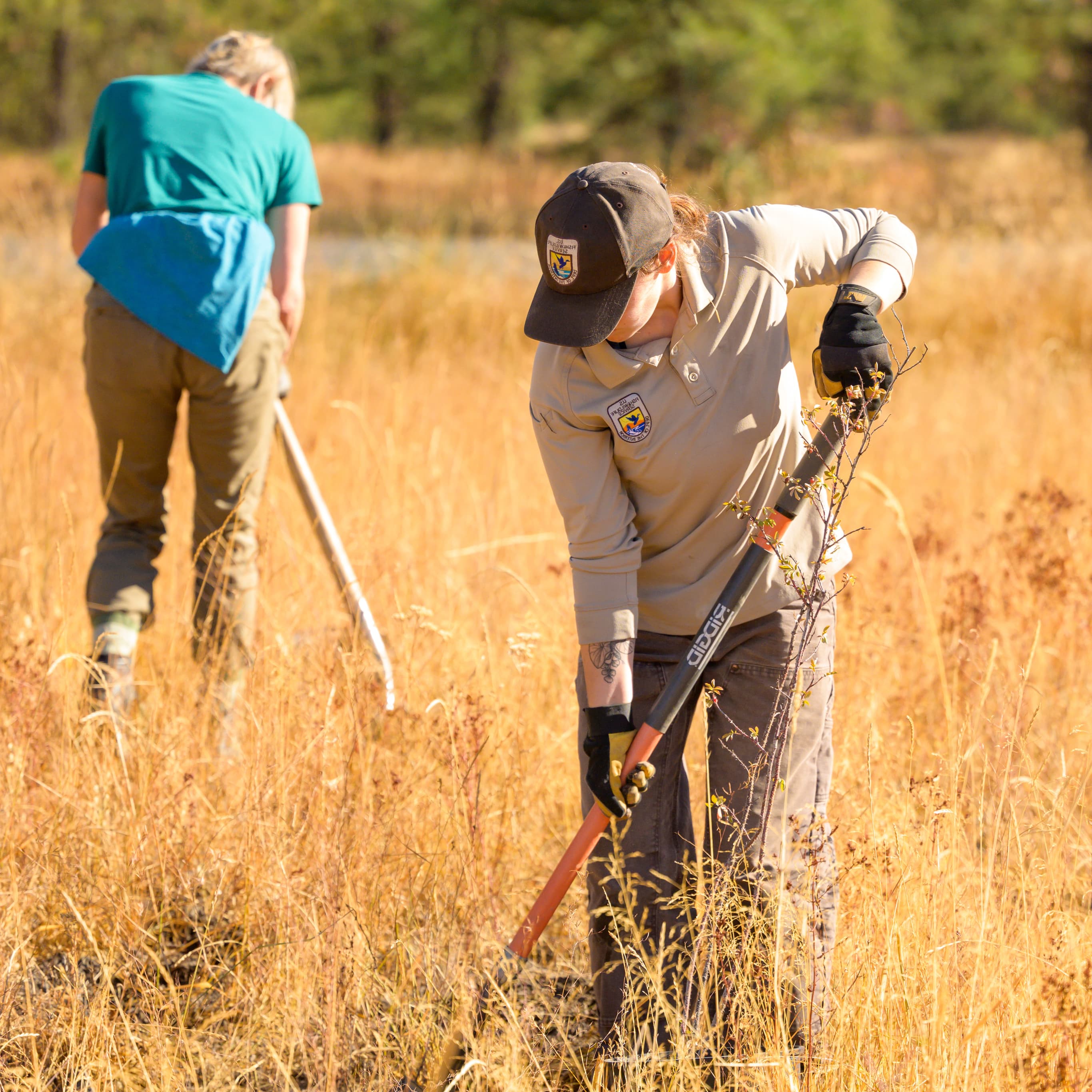
Working with others to conserve, protect, and enhance fish, wildlife, plants, and their habitats for the continuing benefit of the American people.
Services
National Wildlife Refuges contribute to conservation by managing habitats, wildlife populations, and educating the public. At Las Vegas National Wildlife Refuge, this includes managing impoundments for water birds, maintaining a 13-mile gravity-fed pipeline, and irrigating 700 acres of farm fields to provide food for migratory species.
Educational Programming and Outreach:
Our team would love to be a part of your event or host you at the refuge. Our staff can also provide field trips and curriculum-based lessons for all students alike. For event inquiries please email: alyssa_lu@fws.gov.
Projects and Research:
National Wildlife Refuges are a place for wildlife and a place for everyone to learn and discover more about wildlife and the outdoors. We offer the ability to use our refuge as a place of research for grad students, college labs, and more from local colleges, universities, and state and federal organizations. If interested in performing research or utilizing the refuge for a project, please contact: alyssa_lu@fws.gov.
About
The Las Vegas National Wildlife refuge is situated within a unique ecological and cultural crossroads. Human history in the region traces back to earlier than 11,500 BCE, used by Paleoindian and Archaic period hunter-gatherers, and later Ancestral Puebloan and Plains Woodland cultural groups. While Spanish conquests targeted larger Pueblos, like the nearby Pecos Pueblo in Glorieta Pass, the area around Las Vegas National Wildlife Refuge was largely unsettled by Euro-Americans until the Mexican Territorial Period when the Republic of Mexico opened the Santa Fe Trail to trade with the United States, and a group of individuals petitioned for a land grant to settle east of the Sangre de Cristo Mountains in 1835. The refuge is situated on a portion of the historic Las Vegas Land Grant, east of the Santa Fe Trail.
The population of Las Vegas began to grow rapidly after the Atchison Topeka & Santa Fe railroad was completed in 1879. Las Vegas was the second largest town in New Mexico with 7,000 residents by the early 1900s. In 1906, 6 years before New Mexico became a State, an ambitious irrigation project was proposed to support new irrigated pasture and farmlands east of Las Vegas: The Storrie Project. Although it’s main irrigation canal would not be completed until 1923, the project rife with real estate scandals, and homesteads and farmsteads were plagued by drought, hailstorms, poor soils, it was this historic irrigation development around the natural and man-made playas and potholes, that made these lands a perfect location for a National Wildlife Refuge.
